

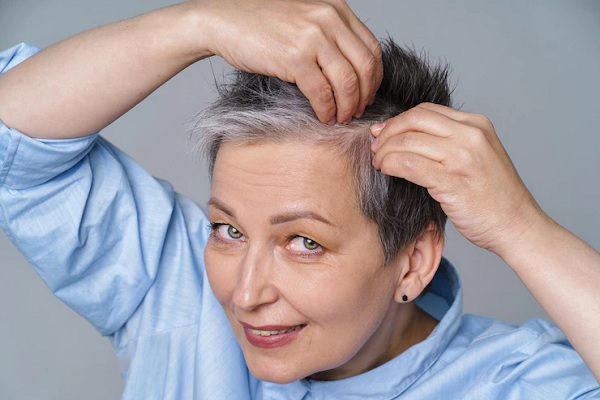
Hair loss, identified as alopecia, emerges as a common challenge for numerous women during the menopausal phase. Recent studies reveal that slightly over 50% of adult women encounter varying degrees of hair thinning or loss connected to the onset of menopause. In this article we will talk about Alopecia In Menopause.
Contrary to its apparent definition – a year without a menstrual cycle – menopause doesn’t confine the transformations leading to hair issues solely to that specific timeframe. The hormonal fluctuations responsible for hair thinning can commence several years before the actual onset of menopause (known as perimenopause) and extend well beyond the formal conclusion of the transition (referred to as postmenopause).
This article delves into the intricate details of alopecia during menopause, shedding light on preventive strategies to mitigate hair loss. Additionally, it explores the complex hormonal dynamics that play a crucial role in precipitating and perpetuating hair-related challenges in women undergoing the menopausal journey.
Symptoms Alopecia In Menopause
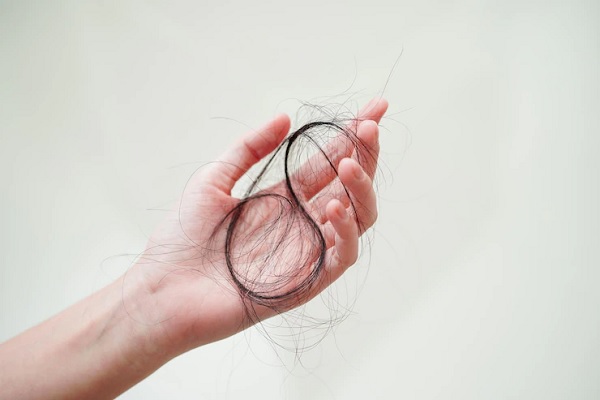
The manifestation of hair loss during menopause may not be immediately conspicuous, given the normal daily shedding of 50 to 100 hair strands. However, as women transition into the perimenopausal phase, the phenomenon of hair loss tends to intensify. The onset of menopause-related hair thinning is marked by subtle early warning signs that demand attention:
Increased Hairbrush Cleaning
You may find yourself regularly cleaning your hairbrush, a noticeable uptick from your usual routine, as the volume of shed hair becomes more apparent.
Elevated Hair Accumulation in the Shower Drain
Another noteworthy sign of changing shedding patterns is the increased accumulation of hair in the shower drain. As you shower, you may observe a more substantial amount of hair clogging the drain, serving as a tangible signal of the shift in your normal hair shedding cycle. This heightened accumulation becomes a visible and tangible manifestation of the alterations occurring in your hair health during menopause.
Expanded Presence of Hair
You start to observe more strands than usual on various surfaces – your pillow, clothes, the floor, and even in your vehicle, signifying a departure from the typical daily hair loss. Witnessing changes in your reflection takes time when dealing with gradual hair loss. You might notice your ponytail looking less voluminous, your parting widening, and your hair losing its usual vitality. As severe hair shedding persists, areas on your scalp, especially at the top and forehead, may visibly thin, signaling the presence of menopausal alopecia.
Thinning patches could also manifest on the back of your head, around the crown, or near the nape. Menopausal alopecia may extend its impact to other body regions, leading to reduced or halted hair growth on the armpits, legs, and arms. Pubic hair might experience thinning and the emergence of bald spots. Alongside these changes, menopausal effects can extend to the eyebrows and eyelashes, making them gradually thinner.
Causes of Alopecia in Menopause
The predominant factor influencing hair loss during menopause revolves around the intricate changes in hormonal levels. Menopausal-related hair loss can manifest at various points across the three distinct phases of menopause: Perimenopause, menopause, and postmenopause. Perimenopause, a precursor to menopause, typically initiates in a woman’s forties and can extend over a span of ten years. This period marks the commencement of hormonal fluctuations, initiating a cascade of changes in the body.
Officially acknowledging menopause requires experiencing 12 consecutive months without a menstrual cycle. Although the timing of menopause is unique to each woman, the average age in the United States hovers around 52.5 years. Following the confirmation of menopause, the post-menopausal phase ensues and spans the remainder of a woman’s life.
The decline in progesterone and estrogen levels characterizes the perimenopausal stage. These two hormones play pivotal roles in fostering the growth, thickness, and fullness of hair. As their levels diminish, hair undergoes a weakening process, resulting in a slower growth rate than experienced previously. Androgenic alopecia, a form of hair loss influenced by androgens, precipitates the shrinking of scalp follicles. The elevation of androgen levels is a direct response to the reduction in progesterone and estrogen. It’s worth noting that androgens, classified as male hormones, are more abundant in men compared to women.
Treatment for Alopecia in Menopause

Addressing the issue of hair thinning during menopause encompasses a multifaceted approach, incorporating pharmaceuticals, prescribed medications, and professional interventions. Among the options available, Rogaine, containing the active ingredient Minoxidil, emerges as a noteworthy solution, commonly employed to counteract male pattern hair thinning. In-depth research indicates its potential effectiveness for women encountering female-pattern baldness post-menopause, fostering a conducive environment for hair regrowth.
Rogaine
Rogaine is conveniently accessible in both foam and serum formulations, with diverse options tailored for both male and female users. Notably, aside from the brand name, generic minoxidil medications are also prevalent in the market. It’s crucial to discern the dosage strength as a pivotal factor distinguishing the male and female variants:
- In the serum form, men’s Rogaine boasts a 5% minoxidil concentration, while the women’s variant features a more moderate 2%. The recommended application regimen for both genders involves twice-daily usage to maximize efficacy.
- For the foam version, exclusively a 5% minoxidil formulation is offered. Men are advised to apply the foam twice daily, whereas women can achieve optimal results with just one application per day. This detailed differentiation in application guidelines underscores the nuanced approach required for addressing menopausal hair thinning with Rogaine.
- Applying topical minoxidil may result in various typical side effects such as itchiness, a burning sensation, dryness, or flakiness. While severe reactions are rare, should you experience weight gain, swelling in the face, breathing issues, dizziness, a rapid heartbeat, or chest pain, seek immediate medical advice. Pregnant women are cautioned against using topical minoxidil.
Microneedling
Microneedling, a relatively recent approach to addressing hair loss, falls under the category of treatments. This procedure can be done either at home or in a dermatologist’s office. However, it is advisable to seek guidance from your doctor before attempting it independently. The technique involves using a roller equipped with numerous tiny needles, creating small perforations in the scalp. Commonly utilized for scar treatment, this controlled damage prompts an immune response that may contribute to fostering hair regrowth.
Researchers primarily focus on androgenetic alopecia when exploring microneedling’s potential for hair restoration. A 2020 review of studies suggests that microneedling has the capacity to enhance hair quality, thickness, and density. To achieve optimal results, experts recommend combining topical minoxidil with microneedling.
Hair Transplant

Hair transplantation emerges as a viable remedy for substantial hair thinning during the menopausal phase. This intricate procedure involves the meticulous relocation of hair follicles from specific donor sites, typically situated at the posterior and lateral regions of the head, to areas experiencing baldness.
Diverse techniques are employed in the realm of hair transplants, each tailored to address unique conditions. These methodologies encompass grafting, flap operations, scalp reduction, and tissue expansion. Notably, hair grafting stands out as the prevailing method, performed by skilled practitioners such as plastic surgeons or dermatologists and facilitated by local anesthesia.
The surgical process involves the extraction of minuscule tissue fragments, known as grafts, each harboring healthy hair follicles. These grafts are meticulously sourced from the resilient regions at the back and sides of the scalp. Once obtained, they are delicately implanted into the areas affected by baldness or thinning. Singularly referred to as hair plugs, these grafts typically consist of varying quantities of hairs, ranging from one to fifteen per transplant.
The culmination of a hair grafting procedure unfolds gradually, necessitating close to a year for the comprehensive results to manifest. Patience is paramount as the transplanted hairs acclimate and flourish in their new environment. In certain instances, as time progresses, additional surgical interventions may become imperative to address emerging bald spots and ensure a more comprehensive and satisfying outcome.
Critical Considerations for Effectively Addressing Alopecia During Menopause

Successfully managing alopecia during menopause involves a comprehensive understanding of key factors. A significant number of women, nearly half, encounter varying degrees of hair loss during this transitional phase. This phenomenon is primarily attributed to the gradual decline in hormone levels, a process that initiates during perimenopause and extends into post-menopausal years.
The intricate relationship between hormones, particularly progesterone and estrogen, plays a pivotal role in shaping the dynamics of hair health. These hormones influence not only the size of individual hair strands but also impact the speed of hair loss and the rate of hair growth. Recognizing this interplay is fundamental to developing tailored and effective treatment strategies.
To navigate the complexities of alopecia during menopause, it is crucial to engage in open and informed discussions with healthcare professionals. Seeking guidance from a healthcare provider becomes indispensable, as it allows for the exclusion of potential underlying health issues that may contribute to thinning hair. Additionally, it aids in identifying the most suitable and personalized treatment options.
Conclusion
Approximately half of women encounter a degree of hair loss linked to menopause. The primary cause is a reduction in hormone levels, commencing in perimenopause and persisting through post-menopausal years. Hormones such as progesterone and estrogen impact the size of hair strands, the speed of hair loss, and the rate of hair growth. Consult with your healthcare provider regarding substantial hair loss to eliminate potential health factors contributing to your thinning hair and determine the most appropriate treatment.


Responsable – CAPIL SOLUTIONS. S.L
*Términos y condiciones
Finalidad – Dar respuesta a las solicitudes de información, y poder enviarle nuestras publicaciones, promociones de productos y/o servicios, gestionar los comentarios en el blog
Derechos Arco - Acceder, rectificar y suprimir los datos, así como otros derechos, como se explica en la información adicional.
info@capilclinic.us
Legitimación – Consentimiento
Destinatarios – No se cederán datos a terceros salvo obligación legal
Política de privacidad – Puede consultar nuestra política de privacidad aquí
*Política de privacidad