


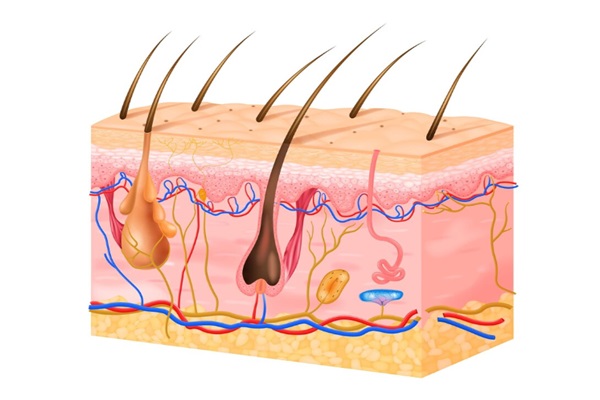
The pilosebaceous follicle is a complex structure in the skin that consists of a hair follicle, a sebaceous gland, and an arrector pili muscle. Hair follicles are responsible for producing hair, while sebaceous glands produce sebum, an oily substance that helps to lubricate and protect the skin. Arrector pili muscles are responsible for causing hair to stand on end. Pilosebaceous follicle are found all over the body, except for the palms of the hands, the soles of the feet, and the lips. They are most dense on the scalp, face, and back.
The pilosebaceous follicle plays an important role in skin health. Sebum helps to keep the skin hydrated and protected from environmental stressors. Hair also helps to protect the skin from the sun and other elements. However, the pilosebaceous follicle can also be a source of problems, such as acne, dandruff, and hair loss. Acne is a condition that occurs when the sebaceous glands produce too much sebum, which can clog pores and lead to breakouts. Dandruff is a condition that causes the scalp to flake and itch. Hair loss can be caused by a variety of factors, including genetics, hormones, and stress.
Different Parts of the Pilosebaceous Follicle

The pilosebaceous follicle is a complex and essential structure found in the skin of mammals, including humans. This tiny but significant anatomical feature serves a dual purpose, housing both hair and sebaceous glands within its structure. To better understand what a pilosebaceous follicle is, let’s break down its components and functions:
Hair Shaft
At the core of the pilosebaceous follicle is the hair shaft. This is the part of the hair that is visible on the surface of the skin. The hair shaft is composed of keratin, a protein, and it grows from the bottom of the follicle, through the skin’s surface.
Hair Bulb
The base of the pilosebaceous follicle houses the hair bulb, where hair growth originates. Within the hair bulb, specialized cells divide and produce new hair cells, pushing the older ones up the follicle, eventually leading to the emergence of hair above the skin’s surface.
Sebaceous Glands
Alongside the hair follicle, sebaceous glands are nestled. These glands produce sebum, an oily substance that lubricates the hair and skin. Sebum helps to prevent the hair from drying out and keeps the skin moisturized. It also plays a role in protecting against harmful microbes.
Arrector Pili Muscle
This tiny muscle is attached to the hair follicle and is responsible for causing hair to stand on end when stimulated, commonly referred to as “goosebumps.” This response is a relic from our evolutionary past and is triggered by various factors, including cold temperatures or emotional responses like fear.
What are the Functions of the Pilosebaceous Follicle?

The pilosebaceous follicle plays a number of important functions, including:
Skin Protection
- Barrier Against Environmental Stressors: The primary function of the pilosebaceous follicle is to protect the skin from a wide range of environmental stressors. The hair produced within the follicle acts as a physical barrier, shielding the underlying skin from harmful UV radiation, wind, dust, and other external factors. This protection is especially crucial in areas of the body where the skin is thinner and more vulnerable.
- Sebum Production: The sebaceous glands associated with the follicle secrete sebum, an oily substance that plays a pivotal role in maintaining skin health. Sebum acts as a natural moisturizer, preventing the skin from drying out and forming a protective film that acts as a barrier against pathogens. It also has antimicrobial properties, helping to fend off potentially harmful microorganisms that may come into contact with the skin.
Temperature Regulation
- Thermal Control: Hair production within the pilosebaceous follicles is intricately linked to temperature regulation. When exposed to cold temperatures, the arrector pili muscles contract, causing the hair to stand upright (goosebumps). This physiological response creates a layer of trapped air, which acts as an insulator, helping to retain heat and keep the body warm. Conversely, in hot conditions, relaxed arrector pili muscles allow the hair to lie flat, promoting heat dissipation and cooling.
Sensory Functions
- Nerve Endings: Pilosebaceous follicles are equipped with sensory nerve endings that serve as important touch receptors. These nerve endings are sensitive to changes in temperature, touch, and pain. They contribute to our ability to perceive tactile sensations and are particularly concentrated in areas where the pilosebaceous follicles are densely distributed, such as the fingertips and face.
- Sensory Feedback: The sensory feedback provided by these nerve endings is critical for our daily interactions with the environment. It helps us sense variations in temperature, detect potential threats or harmful stimuli, and navigate our surroundings effectively.
Problems that can Affect the Pilosebaceous Follicle?

A number of problems can affect the pilosebaceous follicle, including:
Acne
Acne is a prevalent skin condition that often begins during adolescence but can affect people of all ages. It occurs when the sebaceous glands within the pilosebaceous follicles become overactive and produce an excessive amount of sebum, an oily substance.
This surplus of sebum can combine with dead skin cells and block the hair follicle, resulting in the formation of comedones (commonly known as blackheads and whiteheads) and inflammatory lesions like pimples and cysts. Hormonal changes, genetics, diet, and environmental factors can all contribute to acne development.
Dandruff
Dandruff is a common scalp condition characterized by flakiness, itchiness, and the shedding of skin cells from the scalp. It can be caused by various factors, including an overproduction of sebum from the sebaceous glands on the scalp. Another common cause is the presence of a yeast-like fungus called Malassezia, which can irritate the scalp and trigger the shedding of skin cells. Dry skin can also contribute to dandruff.
Hair Loss (Alopecia)
Hair loss can be a distressing issue and may result from a multitude of factors. While genetics is a significant contributor to male and female pattern baldness. Other factors can affect the pilosebaceous follicle and lead to hair loss. Hormonal imbalances, such as those associated with conditions like polycystic ovary syndrome (PCOS) or thyroid disease. Can disrupt the hair growth cycle. Stress, both physical and emotional, can also contribute to hair loss.


Responsable – CAPIL SOLUTIONS. S.L
*Términos y condiciones
Finalidad – Dar respuesta a las solicitudes de información, y poder enviarle nuestras publicaciones, promociones de productos y/o servicios, gestionar los comentarios en el blog
Derechos Arco - Acceder, rectificar y suprimir los datos, así como otros derechos, como se explica en la información adicional.
info@capilclinic.us
Legitimación – Consentimiento
Destinatarios – No se cederán datos a terceros salvo obligación legal
Política de privacidad – Puede consultar nuestra política de privacidad aquí
*Política de privacidad