

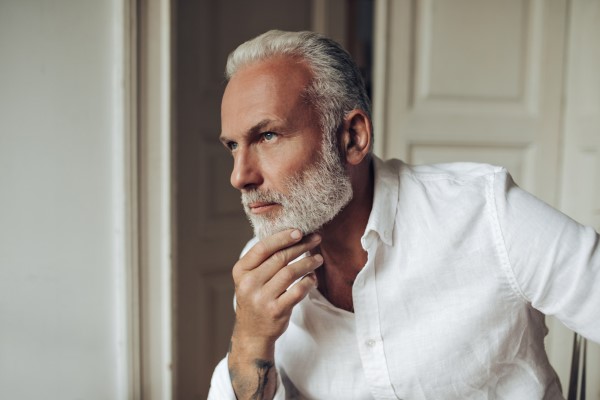
Aging and hair health bring unexpected changes, especially when white or gray roots appear. For many, hair loss with white roots triggers mixed emotions, combining maturity with concern about potential health issues. As these changes become more visible, people may wonder if they are a sign of natural aging or a sign of deeper problems.
Understanding the causes of hair loss with white roots is crucial, as they vary widely. Genetics, health conditions, and lifestyle choices all influence how hair develops over time. This complex process invites us to explore why gray roots and hair loss coexist and to take a closer look at our well-being and what these changes reveal about our health.

Is it normal to have hair loss with white roots?
Hair loss with white roots can be common for many people, especially as they age. So, yes, it’s completely normal. White roots usually indicate that the hair is in the telogen phase, which we will talk about later. However, suppose you are experiencing excessive or sudden hair loss with white roots.
In that case, it may be a good idea to consult with a healthcare professional or a dermatologist to rule out any underlying issues such as nutritional deficiencies, hormonal imbalances, or other health concerns.
Why does hair turn white?
Hair turns white primarily because of a decrease in melanin production, which is the pigment responsible for the color of hair, skin, and eyes. As we age, the melanocytes (the cells that produce melanin) slow down and eventually stop producing pigment altogether, leading to the loss of color in the hair.
Genetics also plays a significant role; some people may experience greying earlier than others due to their hereditary traits. Additionally, factors like stress, nutritional deficiencies, and certain medical conditions can contribute to premature graying.
Causes of hair loss with white roots
The shiny, lustrous locks we all desire can sometimes become dull and lifeless, with white or gray roots peeking through. While this can be a natural part of the aging process, there are several other potential causes for this frustrating hair issue.
- Genetics: Some people are simply predisposed to early graying or whitening of the hair due to their genetic makeup. This is a common and harmless condition that often runs in families.
- Nutrient deficiencies: A lack of essential vitamins and minerals like vitamin B12, iron, and copper can interrupt the natural pigment production in the hair, leading to premature whitening.
- Stress: High levels of stress and anxiety can trigger the release of free radicals, which can damage the hair follicles and disrupt melanin production, causing the hair to turn white.
- Medications: Certain prescription drugs, such as those used to treat cancer, arthritis, or depression, can sometimes have the side effect of accelerating the graying process.
- Illness: Conditions like thyroid disorders, vitiligo, or alopecia areata can all contribute to premature whitening of the hair.
While white or gray roots can be an unwelcome sight, understanding the potential causes is the first step toward addressing the issue. By identifying and tackling the underlying factors, you can take steps to restore your hair’s natural color and vibrancy.
How is the hair root and its structure?
The intricate hair root lies at the base of each hair follicle within the dermis layer of the skin. This root is a harmonious assembly of several essential components—the hair follicle, hair bulb and papilla, and hair shaft—each playing a unique role in the fascinating hair growth process. The follicle is responsible for hair growth and contains several layers.
1. Hair Follicle

Various structures surround the hair root, including the sebaceous gland, which produces sebum to moisturize and protect the hair. The arrector pili muscle also causes the hair to stand on end in response to stimuli such as cold or fear.
- Inner Root Sheath (IRS): This layer closely surrounds the hair shaft and consists of three concentric layers that support and protect the hair as it grows.
- Outer Root Sheath (ORS): This layer surrounds the IRS and extends from the hair bulb to the sebaceous gland duct. It is thicker in the middle and contains cells that can become melanin-producing after skin injury.
- Glassy membrane: A clear layer of connective tissue that surrounds the hair bulb and connects it to the dermis.
2. Hair bulb and hair Papilla
The hair bulb, a significant part of the follicle, is the primary site for hair growth. It houses the hair matrix, a region rich in rapidly dividing cells that architect new hair strands. These cells undergo a process of keratinization, a crucial step where they fill with keratin, a fibrous protein that forms the structure of the hair.
The hair papilla surrounds the hair bulb. It is a small, peg-like structure that contains blood vessels and connective tissue. This vascular network provides essential nutrients and oxygen to the growing hair and also helps to regulate the hair growth cycle.
3. Hair shaft
The hair shaft, the visible part of the hair that extends above the skin’s surface, is a testament to the hard work of the cells in the hair matrix. As these cells divide and are pushed upwards, they harden and compact to form the hair shaft, which emerges from the follicle and projects outward. It consists of three layers:
- Cuticle: The outermost layer comprises overlapping cells that protect the inner layers.
- Cortex: The middle layer that provides strength and color to the hair, composed of tightly packed keratinized cells.
- Medulla: The innermost layer, which may be absent in some hair types, contains soft keratin and air spaces.
The hair growth cycle
It’s beneficial to grasp the hair growth cycle and its workings to comprehend the reason behind hair loss with a white bulb. Each hair on your scalp and body undergoes three distinct stages: anagen, catagen, and telogen.
1. The Anagen Phase: Active hair growth

In the anagen phase, hair grows actively from the follicle until it reaches full length. Known as the growth phase, this stage involves about 90 percent of your hair at any given time. The anagen phase duration varies based on the hair’s location.
That area determines how long it can grow before detaching from the follicle and shedding. For instance, scalp hairs stay in the anagen phase for several years, while body hairs only remain in it for a few months. Consequently, body hair tends to be shorter before shedding.
2. The Catagen Phase: Transition to shedding
After the anagen phase, when hair grows actively, the catagen phase starts as a vital transition that lasts two to four weeks once hair reaches its peak length. During this phase, a specialized type of hair called club hair begins to form. This process may cause noticeable shedding if multiple club hairs detach at once, giving the misleading impression of thinning hair.
Several factors can contribute to this effect, such as hormonal imbalances like hypothyroidism and hyperthyroidism, significant stress, vitamin deficiencies, and the hormonal shifts that follow childbirth. Each of these factors can disrupt the normal hair growth phases, causing unexpected changes in hair density and health.
3. The Telogen Phase: Resting and regrowth
Lastly, the telogen phase, often referred to as the resting phase, is a crucial part of the hair growth cycle. During this phase, the hair follicle is in a state of dormancy, allowing the body to prepare for the eventual shedding of the old hair.
Although no new hair actively grows during this period, the follicles are still essential, as they store the potential for new growth. The telogen phase can last several weeks to a few months, depending on various factors such as hair type, health, and overall hair care practices.

Once this phase concludes, the cycle restarts with the anagen phase, where new hair begins to grow from the follicle, pushing out the old hair in the process. This seamless transition is vital for maintaining a healthy balance of hair growth and shedding, ensuring that the hair remains full and vibrant over time.
Differences between bad and good hair loss with white root
As we’ve explored, hair loss with white roots can have a variety of underlying causes—some of which may be a normal part of the hair growth cycle, while others could indicate a more concerning issue. It’s important to distinguish between the “good” and “bad” white roots to determine if your hair loss requires further attention or intervention.
Good white roots
- The white root appears healthy and intact.
- The hair shaft transitions smoothly from a white root to a colored or pigmented section.
- The white root is short, indicating a recent shedding cycle.
- The overall hair density and growth pattern appear normal.
Poor white roots
- The white root appears thin, wispy, or frayed.
- The transition from white root to colored hair is abrupt or uneven.
- The white root is long, indicating a prolonged shedding cycle.
- Hair appears sparse, thinning, or unevenly distributed on the scalp.

Suppose you notice any “bad” white root characteristics or are experiencing excessive or persistent hair loss. In that case, it’s a good idea to consult a healthcare professional, such as a dermatologist or trichologist (hair and scalp specialist).
Faq’s
What does it mean if I’m losing hair with white roots?
Hair loss with white roots can have several potential causes, including temporary conditions like telogen effluvium or more chronic issues like alopecia areata. It’s essential to consult a healthcare professional to determine the underlying cause.
Is hair loss with white roots a sign of a serious problem?
Not necessarily. While it can be a symptom of certain medical conditions, hair loss with white roots is often a normal part of the hair growth cycle and not an indicator of a serious problem.
How can I stop hair loss with white roots?
The best approach depends on the underlying cause. Addressing any triggers, such as stress or hormonal changes, can help manage telogen effluvium. For more chronic conditions, a healthcare professional may recommend specific treatments.
Conclusion
Hair loss with white roots can be disconcerting and frustrating. However, it’s essential to recognize that it often reflects the natural aging process or a temporary reaction to various internal and external factors (we are not forever young). An awareness of the hair growth cycle and the range of causes behind this issue empowers individuals to take a proactive stance on hair health. Remember to consult with a qualified healthcare professional. It is the most effective way to address the problem and restore hair vitality and strength. Whatever the cause, with the proper knowledge and care, managing white roots becomes easier, fostering patience and a deeper appreciation for the dynamic nature of our hair.


Responsable – CAPIL SOLUTIONS. S.L
*Términos y condiciones
Finalidad – Dar respuesta a las solicitudes de información, y poder enviarle nuestras publicaciones, promociones de productos y/o servicios, gestionar los comentarios en el blog
Derechos Arco - Acceder, rectificar y suprimir los datos, así como otros derechos, como se explica en la información adicional.
info@capilclinic.us
Legitimación – Consentimiento
Destinatarios – No se cederán datos a terceros salvo obligación legal
Política de privacidad – Puede consultar nuestra política de privacidad aquí
*Política de privacidad