


Hair loss is a common concern that affects millions of people worldwide, often causing a significant impact on self-esteem and confidence. For those exploring solutions, the evaluation of follicles for hair transplant is one of the most decisive steps toward a natural result. This essential process not only determines candidacy but also optimises the effectiveness and appearance of the procedure long term.
The ability to accurately assess follicular quality directly influences not only hair regrowth but also the naturalness of the hairline. The evaluation follicles for hair transplant include examining the donor area’s density, scalp condition, and follicle strength. These assessments help surgeons create personalised treatment plans based on the patient’s unique hair pattern and growth cycle.
How is the evaluation of follicles for hair transplant?

Hair transplantation is a surgical procedure that involves an essential step called the evaluation of follicles for hair transplant, which determines the suitability of your donor hair before the actual surgery. This process typically moves hair follicles from one part of the body to another, usually from the back of the scalp to the front or top of the scalp.
This process is crucial to ensure the best results and long-term success of the procedure. Hair transplantation can effectively treat hair loss caused by androgenetic alopecia (male pattern baldness), female pattern baldness, alopecia areata, and other related conditions. Before undergoing any hair restoration surgery, it is vital to have a thorough evaluation by a qualified hair transplant surgeon.
The specialist will assess the quality, density, and caliber of your donor hair, as well as the extent and pattern of your hair loss. This detailed assessment helps determine whether you are a good candidate for hair transplantation and guides the surgeon in estimating how many grafts you will require. In modern procedures such as the FUE hair transplant, this evaluation becomes even more critical for achieving natural and lasting results.
Find out how much your treatment costs today
How to process the evaluation of follicles for hair transplant?
The evaluation of follicles for hair transplant is a meticulous process that involves assessing the quality, quantity, and suitability of donor hair follicles for transplantation. This evaluation for hair transplant is crucial for ensuring successful and natural-looking results in hair restoration procedures. Here’s a step-by-step overview of how the evaluation of follicles for a hair transplant typically takes place. (Source: ResearchGate)
1- Consultation and patient assessment
The process begins with an initial consultation between the patient and the hair transplant surgeon. During this consultation, doctors discuss the patient’s medical history, hair loss pattern, and expectations. The surgeon evaluates the patient’s scalp, hair density, and the extent of hair loss to determine if they are a suitable candidate for a hair transplant.
The patient’s overall health is also assessed to ensure they are fit for the procedure. Throughout the process, patients often want to see hair transplant before and after results to understand what they can expect.
2- Donor area assessment
The donor area is the region of the scalp or body where hair follicles will be harvested for transplantation. The most common donor area is the back and sides of the scalp, where hair is typically resistant to the hormone responsible for hair loss (DHT).
The surgeon carefully examines the donor area to assess hair density, hair quality, and the presence of healthy follicles. Surgeons evaluate the donor area’s elasticity and laxity. They determine how many grafts they can safely extract. Also, they aim to avoid noticeable scarring or thinning.
3- Follicle harvesting technique selection
Depending on the patient’s specific needs and the surgeon’s expertise, the appropriate follicle harvesting technique is selected. The two primary methods are Follicular Unit Transplantation (FUT) and Follicular Unit Extraction (FUE).
In FUT, a strip of tissue containing hair follicles is surgically removed from the donor area and dissected into individual grafts. In FUE, individual hair follicles are extracted one by one using a specialized tool.
4- Follicle examination and preparation

Surgeons examine the harvested follicles under a microscope to check the quality and viability of each graft. They discard any damaged or weak follicles. In addition, they select only healthy, intact grafts for transplantation. They then trim and prepare the grafts for implantation.
5- Recipient site creation
Tiny incisions or channels are made in the recipient area (the bald or thinning area) of the scalp. The angle, depth, and spacing of these incisions are critical to achieving a natural look. The surgeon takes into account the patient’s natural hair growth pattern and the desired aesthetic outcome when creating the recipient sites.
6- Graft implantation
The prepared grafts are meticulously placed into the recipient sites. Care is taken to ensure that the direction and angle of the implanted hair match the surrounding natural hair. The surgeon may implant the grafts in a specific pattern to mimic natural hair distribution and density, ensuring a seamless appearance.
7- Post-operative care and follow-up
After the transplant, the patient is provided with detailed instructions for post-operative care, including the use of medications and avoiding activities that may harm the newly transplanted follicles. Follow-up appointments are scheduled to monitor the progress of hair growth and address any concerns or questions the patient may have.
What to consider when evaluating follicles for hair transplant
The evaluation of follicles for hair transplant involves assessing not just the quantity but also the quality of the donor hair, which directly affects outcomes. This process is also closely tied to expenses, as better donor characteristics can reduce the number of sessions required, lowering overall cost.
Get your personalized quote in minutes!
1- Donor hair density
A high donor hair density allows for more effective graft extraction without compromising the donor area. It refers to the number of follicles per square centimetre, typically on the back and sides of the scalp.
The surgeon evaluates how many grafts can be safely taken while preserving the natural appearance of the donor site. This ensures that the area does not show visible thinning post-extraction. The evaluation must be precise to avoid overharvesting and ensure the health of both donor and recipient areas.
2- Hair caliber
The diameter of each individual hair shaft, known as hair caliber, greatly influences the visual density of transplanted hair. Thicker hair strands provide better coverage with fewer grafts, making them ideal for achieving natural results. During the assessment, surgeons consider whether the hair is fine, medium, or coarse.
Coarse or curly hair generally gives the illusion of more volume, which is beneficial for patients with extensive hair loss. The selection of hair caliber affects not just aesthetics but also hair transplant expenses, especially when seeking maximum density.
3- Hair quality
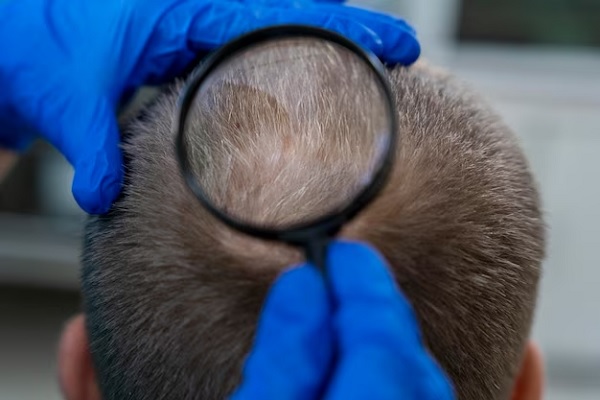
Only healthy hair follicles should be harvested, as their ability to survive the transplant process is vital to success. Surgeons examine follicles using microscopic techniques to detect signs of damage, disease, or miniaturisation.
Hair affected by conditions like androgenetic alopecia may not be suitable for grafting. By selecting robust, undamaged follicles, the risk of transplant failure is reduced. This evaluation also influences the long-term results, helping ensure consistent growth and natural texture in the recipient area.
4- Extent of hair loss
Understanding the recipient area’s degree of hair loss is essential for planning. Patients with more advanced hair loss require a greater number of grafts to cover the balding regions. Surgeons map the areas to be treated, identifying zones that require higher density.
This personalised approach allows for better resource allocation from the donor site. The more hair loss a patient has, the more complex the strategy becomes, often affecting the number of sessions and thus impacting fees.
5- Donor area scalp laxity
Scalp laxity shows how easily the skin in the donor area can be stretched or moved. Surgeons evaluate this to decide how much tissue they can safely remove for grafts. A more elastic scalp allows them to extract more grafts with minimal tension. This reduces the risk of scarring.
Poor laxity may limit the number of grafts, necessitating additional techniques like follicular unit extraction. Ensuring a healthy donor site post-procedure is critical for aesthetic and medical reasons
Follicle survival rates & patient outcomes in FUE transplantation
| Metric | Percentage | Insight |
|---|---|---|
| Graft Survival Rate | ~90% | Overall viability of transplanted follicles |
| Patients with ≥95% Follicle Survival Rate | >85% | Indicates high consistency in outcome |
| Patient Satisfaction | >98% | Reflects satisfaction with appearance and density |
| General Success Rate (85–95%) | 85–95% | Broader range reflecting varied factors |
| Need for Additional Procedure | ~19% | Some required a second session for enhanced density |
Techniques to assess the health and viability of donor follicles
A thorough evaluation of follicles for hair transplant is a critical part of any successful hair restoration procedure. Surgeons use this process to assess the quality and strength of donor follicles. They evaluate each follicle carefully before the transplant. An accurate assessment helps them select only the healthiest grafts. This leads to natural-looking and long-lasting results.
1- Visual inspection
The initial step involves a visual inspection of the donor area. The surgeon examines hair thickness, texture, and uniformity to spot healthy follicles. Strong visual indicators help identify high-quality donor hair that can offer better results during and after the procedure.
2- Microscopic examination
Using microscopes with high power, each follicle is closely analyzed to detect damage or weakness. This microscopic view allows doctors to select follicles that are structurally sound and likely to survive the transplant. It is a necessary part of modern hair restoration.
3- Follicular unit integrity

Follicular units are natural groupings of hair that must remain intact during extraction. Preserving unit integrity maintains the natural density and look of transplanted hair. Damaged or broken units may lead to sparse or uneven hair growth.
4- Hair follicle density
Doctors assess the density of follicles in the donor region to determine how many grafts they can take safely. Accurate density measurement helps avoid thinning or visible scarring in the donor area, ensuring a more aesthetically pleasing outcome.
5- Hair shaft diameter
The thickness of the hair shafts is measured to understand the coverage potential. Thicker shafts can create a fuller appearance with fewer grafts. Hair shaft diameter plays a major role in achieving volume and density in the recipient area.
6- Hair growth cycles
Each hair follicle goes through three main cycles: anagen (growth), catagen (transition), and telogen (resting). Follicles in the anagen phase are ideal for transplantation because they are actively producing hair, increasing the chances of graft survival. (Source: PMC)
7- Donor area scalp laxity
Surgeons measure the scalp’s elasticity to see how much tissue they can safely harvest. Greater scalp laxity allows for more grafts without added risk, making this an important physical factor in transplant planning.
8- Donor area hair characteristics
Hair characteristics in the donor area—like curl pattern, miniaturization, or resistance to hair loss—are also assessed. Unique features of donor hair influence the transplant strategy and its long-term effectiveness.
9- Scalp health
Healthy skin is essential for a successful hair transplant. Doctors check for inflammation, infection, or scalp conditions. Ensuring a healthy scalp creates a better environment for graft healing and hair regrowth.
10- Patient-specific factors
Every patient is different. Age, gender, genetics, and hair loss progression are all considered in the follicle evaluation. Tailoring the assessment to the individual maximizes the chances of achieving desired outcomes.
11- Advanced diagnostic tools
Clinics, particularly in hair transplant Antalya, use high-tech diagnostics like trichoscopy to analyze follicles in detail. Technology enhances the surgeon’s ability to assess follicle health and plan treatment precisely.
12- Patient expectations

Surgeons discuss realistic goals with the patient. They ensure that the donor follicles can support the level of density and coverage the patient wants. Aligning expectations with biological limitations results in higher satisfaction after the transplant. (Source: BioMed Central)
Start your hair transformation now!
Faq’s
How is follicle evaluation done before a hair transplant?
Follicle evaluation is carried out through a detailed scalp examination, often using magnification tools or digital imaging. The surgeon checks the density, thickness, and quality of donor hair. This step ensures that there are enough healthy follicles for a successful transplant.
Why is follicle quality important for a hair transplant?
The success of a hair transplant depends on the strength and health of donor follicles. Weak or miniaturized follicles may not survive the procedure, leading to poor growth. Evaluating follicle quality helps predict long-term results and natural-looking hair density.
Can hair transplant doctors measure follicle density accurately?
Yes, doctors can measure follicle density using advanced diagnostic tools like trichoscopy or scalp analysis software. These methods give precise information about the number of follicular units per square centimeter. Accurate density measurement is crucial to avoid overharvesting the donor area.
What happens if my follicles are not strong enough for a transplant?
If follicles are too weak, doctors may recommend alternative solutions such as medical treatments, platelet-rich plasma (PRP) therapy, or postponing surgery. In some cases, body hair can be considered as a donor source. The goal is to ensure only viable follicles are used.
How many follicles do I need for a successful hair transplant?
The number of follicles required depends on the extent of hair loss and the desired density. On average, patients may need between 1,500 and 4,000 grafts. Proper follicle evaluation helps the surgeon plan the exact number for natural and lasting results.
Does follicle evaluation affect hair transplant cost?
Yes, the evaluation helps determine how many grafts are needed, which directly influences the price. A higher number of strong follicles usually means a larger transplant session, leading to higher costs. Clear evaluation prevents unnecessary procedures and unexpected expenses.
Can follicle evaluation predict long-term transplant results?
Follicle assessment gives doctors a clear idea of hair survival and growth potential. Strong, healthy follicles usually guarantee better coverage and longevity. While no method can predict results with 100% certainty, thorough evaluation greatly increases success rates.
Conclusion
The evaluation of follicles for hair transplant is the cornerstone of any successful hair restoration journey. Also referred to as donor hair analysis or follicular assessment, this stage determines whether the scalp contains viable grafts and whether the patient is an ideal candidate.
Evaluating donor area strength and graft potential is especially critical in modern clinics that aim to merge surgical expertise with cutting-edge diagnostic tools. Beyond the medical implications, pre-transplant follicle evaluation influences cost-efficiency and long-term satisfaction. Patients benefit from a reduced number of sessions, less trauma to the scalp, and improved graft survival rates.
If you’re considering a hair transplant and want the best possible results, a comprehensive follicular evaluation is essential. At Capilclinic.us, we specialise in thorough, expert-led assessments that lay the foundation for successful, natural-looking hair restoration. Visit our website today to begin your consultation and take the first step towards confident, lasting hair transformation.


Responsable – CAPIL SOLUTIONS. S.L
*Términos y condiciones
Finalidad – Dar respuesta a las solicitudes de información, y poder enviarle nuestras publicaciones, promociones de productos y/o servicios, gestionar los comentarios en el blog
Derechos Arco - Acceder, rectificar y suprimir los datos, así como otros derechos, como se explica en la información adicional.
info@capilclinic.us
Legitimación – Consentimiento
Destinatarios – No se cederán datos a terceros salvo obligación legal
Política de privacidad – Puede consultar nuestra política de privacidad aquí
*Política de privacidad