

Achieving healthy, lush hair is possible for both men and women, as long as you put in the effort. The main difference between men’s hair and women’s hair lies in the way they are handled. Men often opt for the no-fuss approach, air-drying their hair and not putting much emphasis on maintenance. On the other hand, women often use heat styling tools, dye their hair, wear it long, and visit the salon frequently to get the latest styles. Read on to learn about your hair if you’re a man trying to control his mane.
How Men’s Hair Grows
It is important to understand the growth cycle of male hair to keep it healthy. On the scalp, there are about 100,000 hair follicles, and each strand goes through three stages of growth: anagen, catagen, and telogen.
- The anagen stage is the active growth phase, which lasts between 2 and 6 years.
- Catagen is the transitional phase in which the hair stops growing and lasts for 2-3 weeks.
- Telogen is the resting phase in which the hair falls out and lasts for 2-3 months.
The same process applies to body and facial hair, but the cycle is shorter, so body hair doesn’t grow as long as scalp hair.
Hair grows faster in men
Men’s hair tends to grow faster due to several biological and hormonal factors. One of the main factors is testosterone, a hormone present in higher amounts in men. Testosterone and its derivative, dihydrotestosterone (DHT), play a crucial role in the hair growth cycle. These hormones stimulate hair follicles, promoting faster hair growth.
In addition, men typically have a higher number of active hair follicles compared to women, which also contributes to faster hair growth. Genetics is another important factor; Some men inherit a genetic predisposition that favors faster hair growth.
On the other hand, women experience more hormonal fluctuations due to factors such as the menstrual cycle, pregnancy, and contraceptive use, which can slow down hair growth.
Men’s hairline
Men typically have the following types of hairlines:
Low hairline
A low hairline may be more prevalent in boys and younger men, who have not yet begun to lose hair. Youthful hairline is the term used to describe low, straight hairlines. A low hairline refers to one that starts closer to the eyebrows than the usual hairline does, just like in women. It seems that the forehead is narrow.
Midline
Men with average or intermediate hairlines appear to have foreheads of proportional size. Men in their teens and 20s often have this type of hairline. Sometimes, the midline of the hair can be crooked or uneven. It may also appear angular or straight.
Entrance
The interaction of hormones and hair follicles, such as testosterone, results in male pattern baldness, which is an inherited characteristic. The term “androgenetic alopecia” is also used to describe this disorder. Men’s hairline receding can also result in a deep “M” pattern if the hair near the temples recedes significantly.
Whirlpool
Hair that grows in a different direction than the surrounding hairs forms swirls. Although they can appear anywhere on the head, the strands are most often found on the hairline or crown of the head. Eddies can affect both sexes equally and are gender-neutral. They are most often seen in men with short hair and limited styling options.
Common Male Hair Problems
Male Pattern Baldness
Male pattern baldness, also known as androgenetic alopecia, is an inherited condition that affects many men. It is characterized by hair loss on the top and front of the scalp. The main cause is genetics, but hormonal factors also play a role, especially dihydrotestosterone (DHT), which shortens the hair growth cycle.
How to treat it?
- Medications: Finasteride and minoxidil are the most common treatments. Finasteride reduces DHT levels, while minoxidil stimulates hair growth.
- Therapies: Low-level laser therapy can help stimulate hair follicles.
- Hair transplant: A surgical procedure in which hair follicles are transplanted from one part of the scalp to another.
- Hair Prostheses: Wigs and custom hair systems.
Dandruff
Dandruff is a common scalp condition that causes peeling skin. It can be embarrassing and sometimes difficult to treat. It can be caused by dry skin, seborrheic dermatitis, sensitivity to hair products, and the growth of a fungus called Malassezia.
How to treat it?
- Anti-dandruff shampoos: Products that contain ingredients such as zinc pyrithione, ketoconazole, selenium sulfide, or salicylic acid.
- Proper hygiene: Wash your hair regularly to remove excess oil and dead cells.
- Dietary changes: Increase your intake of omega-3 fatty acids and reduce your consumption of processed foods.
Oily hair
Oily hair is characterized by excess sebum produced by the sebaceous glands of the scalp, which can make the hair look dirty and lifeless. Some of the causes of this problem can be genetic factors, hormonal changes, excessive use of hair products, and improper hair washing.
How to treat it?
- Specific shampoos: Use shampoos formulated for oily hair that contain ingredients such as salicylic acid or sulfates.
- Washing frequency: Wash hair more frequently to control sebum production.
- Avoid heavy products: Do not use conditioners or styling products that can increase oil.
Dry and Damaged Hair
Dry and damaged hair can be brittle, dull, and difficult to manage. This can be a result of environmental factors, chemical treatments, or the overuse of heat tools. It can be caused by sun exposure, use of dryers and irons, chemical treatments such as dyes and perms, and excessive washing.
How to treat it?
- Deep hydration: Use hair masks and deep conditioners regularly.
- Sulfate-free products: Opt for sulfate-free shampoos and conditioners that do not strip the hair’s natural oils.
- Heat protection: Use heat shields before using heat tools.
- Regular cuts: Cut split ends to prevent damage from spreading.
How to take care of men’s hair?
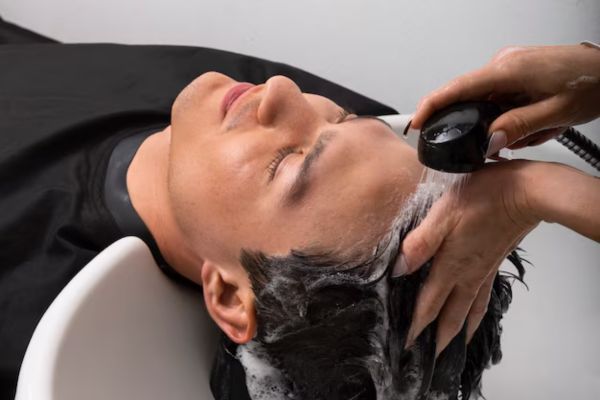
Identify Your Hair Type
The first step in taking care of your hair is to identify whether it is dry, oily, normal or mixed. This will allow you to select the right products and establish a specific care routine.
Correct Washing
Frequency: Wash your hair 2-3 times a week. Washing your hair every day can remove the natural oils that keep it protected.
Shampoo: Use a shampoo that’s right for your hair type. If you have oily hair, choose a shampoo that controls sebum production. For dry hair, opt for a moisturizing shampoo.
Conditioner: Apply conditioner to the ends of the hair to keep it hydrated and prevent frizz. Avoid applying it to the scalp to prevent it from becoming oily.
Drying
Natural Drying: Whenever you can, allow your hair to air dry naturally. Avoid rubbing your hair with a towel, as this can cause damage and frizz.
Blow dryer: If you need to use a blow dryer, use a low or medium heat and keep the dryer at a safe distance from the hair to avoid heat damage.
Food & Supplements
Balanced Diet: A diet rich in protein, vitamins, and minerals is essential for hair health. Add foods such as fish, nuts, fruits, and vegetables to your diet.
Supplements: If necessary, consider taking biotin, zinc, and B-complex vitamin supplements to strengthen hair.
Stress Management
Stress can lead to hair loss. Practice relaxation techniques such as yoga, meditation, or regular exercise to keep stress under control.
Sunscreen
Sun exposure can damage both hair and scalp. Wear a hat or sunscreen for your hair when you’re out in the sun for long periods.
Hair Massages
Hair massages can improve blood circulation in the scalp, which can stimulate hair growth. Gently massage your scalp with your fingertips for a few minutes a day.
Avoid Chemicals
Dyes and Perms: Limit the use of dyes and chemical treatments that can damage the hair. If you decide to dye your hair, opt for ammonia-free products and make sure to moisturize it properly afterward.
Styling Products: Use styling products sparingly. Gel, wax, and other products can build up on the scalp and cause problems if not removed properly.
Regular Cuts
Cut your hair regularly to get rid of split ends and keep it in good condition. A trim every 6 to 8 weeks is great for keeping your hair healthy.
Consult a Professional
If you have persistent problems with your hair, such as excessive hair loss or dandruff, see a dermatologist or trichologist. They can offer you specific treatments and professional advice.
Historical and cultural data on male hair

Antiquity and the Middle Ages
In ancient times, long hair on men was a symbol of strength and virility. For example, in Japan’s samurai culture, warriors wore their hair long and tied back in a bun, and cutting it was a ceremonial act marking the end of their career or a defeat. In ancient Egypt, men often shaved their heads to keep cool, but wore wigs in public.
Rome and Greece
In ancient Rome, short hair was a sign of civilization and discipline. Roman men adopted this style to differentiate themselves from the barbarians, who wore their hair long. This practice continued for centuries and was associated with law and order.
The Modern Age
During the Modern Age, men’s hairstyles varied considerably. In 17th century Europe, men of the nobility wore long, elaborate wigs as a symbol of status. However, in the 18th century, short hair became popular again, especially among the military, due to practical and hygienic reasons.
20th Century
The 20th century saw great diversity in men’s hairstyles. In the 1960s, long hair became a symbol of rebellion and counterculture, popularized by bands such as The Beatles. This style was seen as a protest against established social norms and was associated with peace and love movements.
Cultural and Religious Influences
In many cultures, hair has spiritual and religious significance. For example, in Sikhism, men do not cut their hair as a symbol of respect for God’s creation. In other cultures, long hair on men may symbolize wisdom and connection to the divine.
Modern Times
Today, men’s hairstyles are extremely varied and reflect both individuality and fashion trends. From very short haircuts to longer, messier styles, men have a wide range of options to express their personality and style.
Conclusion
The hair of men has been a symbol of identity and style throughout history. Its care and appearance can significantly influence self-esteem and social perception. From classic cuts to modern styles, hair reflects cultural and personal trends. Additionally, hair health is an indicator of overall well-being, as factors such as nutrition, stress, and genetics play a crucial role in its condition. In summary, men’s hair is not only a physical characteristic but also an expression of individuality and health.


Responsable – CAPIL SOLUTIONS. S.L
*Términos y condiciones
Finalidad – Dar respuesta a las solicitudes de información, y poder enviarle nuestras publicaciones, promociones de productos y/o servicios, gestionar los comentarios en el blog
Derechos Arco - Acceder, rectificar y suprimir los datos, así como otros derechos, como se explica en la información adicional.
info@capilclinic.us
Legitimación – Consentimiento
Destinatarios – No se cederán datos a terceros salvo obligación legal
Política de privacidad – Puede consultar nuestra política de privacidad aquí
*Política de privacidad