

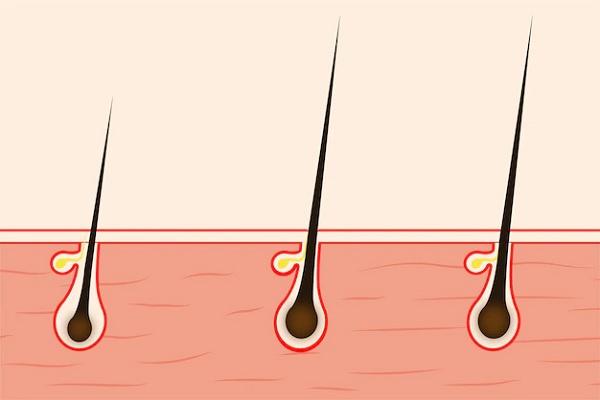
Understanding the cycle of hair growth involves recognizing that it’s more than a simple process of growth and shedding. There are four distinct phases, each unfolding in a specific order. Researchers have delved into these stages to unravel insights into hair growth, seeking solutions for early hair loss prevention or treatment. The initial three phases—namely anagen, catagen, and telogen—encompass the development, maturation, and follicular activities responsible for creating individual hair strands. The concluding phase, referred to as exogen, marks the shedding of “old” hair. Interestingly, during this phase, a new strand typically begins to emerge, continuing the cycle.
Each phase maintains its unique tempo, influenced by factors like age, diet, and overall health. Significantly, interventions can be adopted at various stages to ensure a healthy progression of the hair growth cycle. Discover these interventions below.
The 4 Hair Growth Stages
Anagen

The inaugural stage in the intricate process of hair growth is denoted as the anagen phase. This pivotal period, distinguished by its protracted duration, spans a remarkable three to five years, and in some instances, a singular hair strand may persist in its growth for an extended seven years. The fortuitous aspect lies in the diverse development of the anagen phase across various hair types. Notably, the anagen phase for pubic and eyebrow hair manifests as notably abbreviated compared to the more extended anagen phase observed in the context of scalp hair. During this phase, the dynamic activity of hair follicles results in the continuous generation of new hair, persisting until either it undergoes intentional trimming or completes its life cycle, eventually shedding.
Impressively, at any given juncture, a staggering ninety percent of the follicles on the scalp are actively engaged in the anagen phase.
Catagen
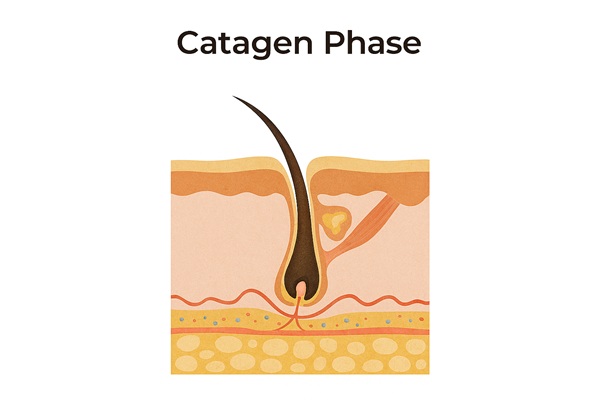
Commencing its narrative subsequent to the culmination of the anagen phase, the catagen stage unveils itself, maintaining a temporal presence of approximately ten days. This segment of the hair growth chronicle witnesses a contraction of hair follicles, inducing a deceleration in the rate of hair development. Intriguingly, during the concluding days of this phase, hair, while detached from the base of the follicle, exhibits a tenacious grip and does not undergo immediate shedding. A mere five percent of human scalp hairs partake in the transitional ballet at any given moment.
Telogen

The telogen phase, characterized by its quiescent repose, typically extends over an average period of three months, encapsulating between 10 to 15 percent of the total head hair count. In this contemplative period of the hair cycle, a temporary hiatus ensues, during which hairs neither undergo active growth nor precipitous shedding.
Intricately choreographed within the telogen phase, follicles that have recently concluded the catagen stage embark on the production of new hairs, thereby initiating a process of renewal. Although some within the medical fraternity attribute the telogen phase to the shedding process, the majority of researchers distinguish between the telogen and exogen stages, further unraveling the intricacies of hair dynamics.
Exogen

In the intricate tapestry of hair growth, the exogen phase is intricately intertwined with the telogen phase, acting as both an extension and a distinct component. This distinctive stage involves the natural shedding of hair from the scalp, a process that can be facilitated through activities like gentle washing and regular combing. It is customary for individuals to experience a daily loss of approximately 50 to 100 hair strands during the exogen phase, a duration spanning two to five months. Notably, this period is characterized by the simultaneous generation of new hairs by follicles as they cast off the older ones.
Diverse Influences on Hair Growth

Hair growth is a complex process influenced by a myriad of factors that go beyond simple care routines. Understanding the intricacies of these influences provides a more comprehensive view of maintaining optimal hair health.
- Genetics: Delving into the genetic aspect reveals a significant role in determining hair growth patterns. Individuals inherit distinctive genetic codes that influence the thickness, color, and growth rate of their hair. Understanding one’s genetic predisposition can provide insights into managing and maintaining hair health.
- Hormones: Hormonal balance is a key determinant in the health of hair follicles. Fluctuations in hormone levels, such as those occurring during puberty, pregnancy, or menopause, can impact the growth cycle of hair. Conditions like polycystic ovary syndrome (PCOS) or thyroid disorders can also disrupt hormonal equilibrium, leading to changes in hair growth.
- Diet: The role of nutrition in hair growth cannot be overstated. A well-balanced diet rich in vitamins, minerals, and proteins is essential for maintaining healthy hair. Nutrients like biotin, iron, zinc, and vitamins A and E play crucial roles in promoting hair growth and preventing issues such as hair loss and breakage.
- Stress: The intricate connection between stress and hair health is well-established. Elevated stress levels trigger the release of hormones that can disrupt the natural growth cycle of hair follicles, leading to increased shedding or slowed growth. Adopting stress management techniques, such as meditation or exercise, becomes crucial for maintaining optimal hair health.
- Medical Conditions: Various medical conditions can directly impact hair growth. Conditions like alopecia areata, dermatitis, or fungal infections can lead to localized or widespread hair loss. It is imperative to address underlying medical issues to effectively manage and treat hair-related concerns.
Disorders Affecting Hair Growth

Alopecia Areata
Alopecia areata is a specific hair loss disorder characterized by the sudden onset of round patches of hair loss on the scalp or other areas of the body. This condition occurs when the immune system mistakenly attacks the hair follicles, leading to hair loss. The affected areas may be smooth and may exhibit regrowth in some cases. While the exact cause is unclear, genetic factors, autoimmune conditions, and environmental triggers are believed to play a role. Seeking medical attention is crucial for a proper diagnosis and the exploration of potential treatment options.
Telogen Effluvium
Telogen effluvium is a temporary condition that results in excessive shedding of hair. It occurs when a large number of hair follicles simultaneously enter the telogen (resting) phase of the hair growth cycle. Various factors can trigger telogen effluvium, including physical or emotional stress, hormonal changes, illness, or certain medications. Identifying and addressing the underlying cause is vital for managing this condition. While hair regrowth is typical once the triggering factor is resolved, consultation with a healthcare professional is recommended for a comprehensive evaluation.
Male Pattern Baldness
Male pattern baldness, also known as androgenetic alopecia, is a hereditary condition that causes gradual hair thinning and loss in men. It typically follows a specific pattern, with a receding hairline and thinning at the crown. Hormonal factors, particularly the influence of dihydrotestosterone (DHT), contribute to the shrinking of hair follicles in susceptible individuals. While not a result of a specific disease, male pattern baldness can impact self-esteem.
Treatment options, including medications and hair restoration procedures, can be discussed with a healthcare provider to manage the progression of hair loss.
Female Pattern Baldness
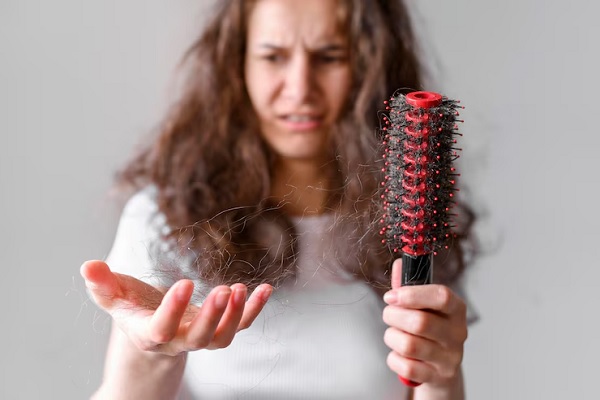
Female pattern baldness, similar to its male counterpart, is a hereditary condition causing diffuse thinning of hair in women. It often manifests as widening of the part and overall thinning across the scalp. Hormonal factors, such as changes in estrogen levels, contribute to this condition. While less common than male pattern baldness, it can significantly affect a woman’s self-image. Consulting with a healthcare professional allows for an accurate diagnosis and the exploration of treatment options, which may include medications or lifestyle modifications.
Safeguarding the Vibrancy of Your Hair Through Every Growth Phase
While genetic predisposition and hormonal fluctuations wield a substantial influence over the health and fullness of your hair, there exist elements within your sphere of control. Embracing a wholesome lifestyle and diligently caring for your hair are pivotal practices. Delving into a more detailed exploration, consider the following nuanced strategies applicable across the four distinct hair growth phases:
- Cultivate a Nutrient-Dense Dietary Regimen: Just as the sustenance of our overall health demands vital nutrients, the flourishing of our hair relies on a similar foundation. Elevating the intake of protein-rich foods, such as fish, almonds, and lean meat cuts, emerges as a fundamental approach to fortifying your hair. Furthermore, the incorporation of foods abundant in vitamins C and D, along with essential minerals like iron and zinc, serves as a multifaceted contribution to the enduring health of your hair.
- Navigating Stress: Effectively managing stress not only enhances our overall well-being but also plays a crucial role in fostering the longevity and vibrancy of our hair. One impactful strategy involves integrating regular physical activities into our routines. Coupled with dedicating daily time to indulge in personal interests and hobbies. Incorporating practices such as yoga, meditation. And various relaxation techniques proves to be highly effective in mitigating stress and promoting mental and physical equilibrium.
- Nurturing Your Hair: Analogous to the conscientious attention given to personal health for sustained physical fitness. Caring for our hair is paramount to maintaining its optimal health. Selecting appropriate shampoo and conditioner tailored to individual hair needs is a foundational step in ensuring its ongoing vitality. It is advisable to delicately dry the hair post-shampoo, recognizing that wet hair is more prone to damage. Furthermore, the avoidance of hot water during shampooing is recommended to prevent potential harm to the hair structure.
Conclusion
Unraveling the mystery of the differential growth rates among individuals’ hair remains an intriguing puzzle for scientific researchers. When confronted with accelerated hair loss, seeking consultation with a medical professional is prudent. Timely intervention not only halts further hair loss but also safeguards the overall health of one’s hair. Acknowledging the absence of a universal solution, a personalized, trial-and-error approach becomes essential to identify the most effective options. Regular haircuts emerge as a proactive measure. Stimulating the regeneration of new hair follicles and contributing significantly to sustained hair health.


Responsable – CAPIL SOLUTIONS. S.L
*Términos y condiciones
Finalidad – Dar respuesta a las solicitudes de información, y poder enviarle nuestras publicaciones, promociones de productos y/o servicios, gestionar los comentarios en el blog
Derechos Arco - Acceder, rectificar y suprimir los datos, así como otros derechos, como se explica en la información adicional.
info@capilclinic.us
Legitimación – Consentimiento
Destinatarios – No se cederán datos a terceros salvo obligación legal
Política de privacidad – Puede consultar nuestra política de privacidad aquí
*Política de privacidad