

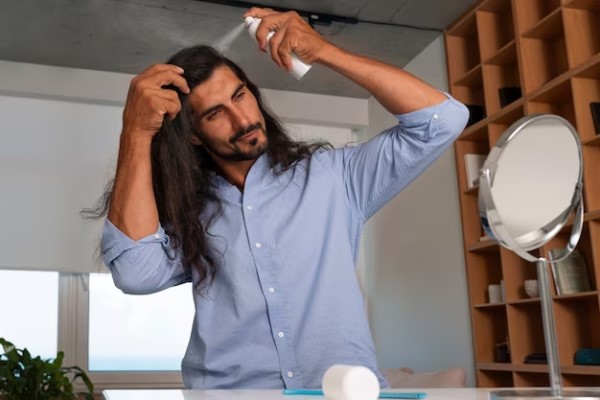
Safeguarding your hair from the sun’s potent rays is a widely acknowledged imperative, especially in the summer. Neglecting this precaution can have a host of drawbacks, such as hair fragility and parchedness, coupled with the potential for a sun-induced burn on your scalp. Contrary to common belief, our hair doesn’t offer robust protection to our sensitive scalp, particularly if our hair is thinning. So, it’s very important to protect hair from sun damage.
Effectively shielding your hair and scalp from the sun’s effects demands a two-pronged tactic. This entails using sunscreen and heat protectants alongside tangible barriers such as wide-brimmed hats and umbrellas. These physical measures work in concert to obstruct the sun’s impact, ensuring that your hair and scalp are shielded from harmful UV rays and that you can relax knowing how to protect hair from sun damage.
Why is it necessary to protect hair from sun damage?

The sun’s rays provide warmth and light, but prolonged exposure can damage your hair. While many enjoy the sun for its benefits, excessive UV radiation can weaken hair structure, among others. However, it has one benefit.
Positive effects
Sunlight helps your body produce Vitamin D, which is essential for various bodily functions, including the health of your skin and scalp. Vitamin D supports the differentiation of keratinocytes, the cells that make up the majority of your skin and scalp.
Negative effects
UV radiation poses significant risks to the moisture balance within our hair, leading to a wide range of issues that affect both its health and appearance. The sun emits powerful rays that can penetrate the hair shaft and strip away the hair’s natural oils—lipids that play a critical role in maintaining hydration and overall hair vitality. These oils not only help to retain moisture but also form a protective barrier against pollution.
When hair loses its natural oils, it depletes moisture. This way, it leaves the strands dry and brittle. This lack of hydration can make hair much more challenging to manage, as it becomes more susceptible to breakage and frizz. The texture of dry hair often leads to the formation of split ends, which not only hamper styling efforts but also necessitates more frequent trims to maintain a healthy look.
Additionally, the absence of moisture profoundly impacts hair’s overall appearance. Hair that lacks hydration tends to lose its natural shine and luster, presenting a dull and lifeless look. Without the essential moisture for vibrancy, hair can lack the vitality that reflects health and beauty. Consequently, sustaining the moisture equilibrium in hair is crucial for maintaining both its physical integrity and aesthetic appeal, especially in environments with high UV exposure.
How to protect hair from sun damage?
There are a few simple measures you can take to help protect your hair from sun damage. Try to find the ones that work best for you. However, you might find it helpful to implement several of the following tips to help protect your hair from sun damage.
P.S. It is advisable to exercise caution when using these tips, as overuse could potentially have adverse effects on the health of your hair.
Nourish your hair with moisture

The sun’s rays can dry out hair, so maintaining moisture is a key priority. Before stepping out into the sun, ensure you stay hydrated by consuming sufficient water. Additionally, packing hydrating snacks such as water-rich fruits and vegetables can contribute to overall hydration.
To provide targeted care for your hair, consider applying a deep conditioning treatment before sun exposure. This will effectively lock in moisture, preventing your hair from becoming parched.
Protect hair from sun damage by adjusting your shampoo routine
Adapting your shampoo routine can be a game-changer. While taking a cool shower after a day in the sun is tempting, reconsider your hair-washing frequency. It is advisable to limit hair washes to every other day at most.
Daily shampooing can strip your hair and scalp of natural oils, potentially causing your scalp to overcompensate by producing excess sebum. On days when you’re not washing your hair, try thoroughly rinsing it with lukewarm water. This rinsing technique effectively removes dirt and debris without disrupting your scalp’s equilibrium.
Sun protection for your skin

We often focus on our face and body when we think of sunscreen application. However, it’s crucial not to overlook the delicate skin on your temples, ears, and the part in your hair. Extend your sunscreen application to these areas generously.
According to the American Academy of Dermatology, opt for a water-resistant sunscreen labeled “broad spectrum” with a minimum SPF of 30. This ensures maximum protection for your hair, skin, and scalp.
Embrace the shade (or create it)
Sheltering yourself under the shade of a tree, umbrella, or pergola can protect hair from sun damage on your scalp. However, don’t misconstrue this as a reason to skip sunscreen application. Remember that UV rays can reflect off various surfaces, including water, light-colored concrete, and sand.
While shade provides some protection, it’s imperative to continue applying sunscreen to any exposed skin. For enhanced defense, consider wearing wide-brimmed hats and sunglasses. As an additional tip, try to avoid direct sun exposure between 10 a.m. and 4 p.m., when UV rays are most potent. This will allow you to relish the sun while minimizing its detrimental impact.
Use heat protection to protect hair from sun
Ultraviolet radiation can severely impact hair moisture balance, causing several health and appearance issues. The sun’s rays strip hair of its natural oils, which are essential for retaining hydration and providing a protective barrier against environmental stressors. This loss leads to dry, brittle hair that is more prone to breakage and frizz.
Additionally, dry hair often develops split ends, necessitating frequent trims and detracting from its overall appearance. Furthermore, lacking moisture results in dull, lifeless hair, diminishing its vitality and shine. Therefore, maintaining moisture balance is vital for hair health and aesthetic appeal, particularly in high-UV environments.
How does UV damage hair?

Ultraviolet (UV) damage to hair largely stems from the sun’s intense rays, which can compromise the hair’s integrity and strength. These harmful rays penetrate the hair shaft, weakening the structure and making the strands more susceptible to breakage. Over time, this exposure can strip hair of its natural moisture, leaving it dry, brittle, and devoid of luster.
Protein breakdown
Hair is primarily composed of keratin, which is a vital structural protein that provides strength and durability to each strand. However, when hair endures prolonged exposure to ultraviolet (UV) radiation, the integrity of keratin can be severely degraded.
This degradation weakens the hair shaft, making strands more brittle and increasingly prone to breakage. Consequently, hair loses its natural vitality and shine, contributing to an unhealthy appearance that can be difficult to reverse.
Melanin degradation
Melanin, the pigment responsible for hair’s unique color, absorbs UV rays and protects the hair’s structure. However, with continual exposure to the sun’s harsh rays, the melanin molecule breaks down, significantly fading vibrant hues.
This not only reduces the hair’s aesthetic appeal but also diminishes its protective properties, making it more susceptible to further damage. The loss of melanin can alter the characteristics of hair color, causing it to appear faded and lifeless.
Cuticle damage
The cuticle is the outer protective layer of each hair strand, safeguarding the inner structures from environmental aggressors. However, UV exposure can significantly damage this critical protective layer.
When the cuticle is disrupted, it leads to a rough texture, increased tangling, and the appearance of split ends. This breakdown contributes to an unkempt look and compromised hair health. A damaged cuticle can make the hair more porous and vulnerable to external stressors, compounding the issues of dryness and breakage.
Oxidative stress
Intense UV rays can induce oxidative stress by generating free radicals—unstable molecules that can damage hair cells. This oxidative damage alters the chemical bonds within the hair structure, further weakening the strands and diminishing their strength and appearance.
Over time, hair exposed to UV radiation may become dull, lifeless, and lacking in vitality as the cumulative effects of oxidative stress become more pronounced. This highlights the importance of adequate hair care routines, including protective measures against UV radiation, to maintain healthy and vibrant hair.
Moisture loss

UV radiation has detrimental consequences on the moisture equilibrium within the hair. The sun’s intense rays can strip away the hair’s natural oils, essential for maintaining hydration and overall hair health. This moisture depletion results in dry, brittle, and difficult-to-manage hair.
Moreover, dry hair is more prone to frizziness and split ends, which further challenges the achievement of smooth and manageable locks. The absence of moisture affects the general feel and appearance of the hair, contributing to a lack of shine and vitality.
Faq’s
How can I protect hair from sun damage?
You can protect your hair by wearing hats or scarves, using UV protection sprays, and applying leave-in conditioners with SPF. You can also let your hair air dry and apply heat protectants if styling is necessary.
Does sea or pool water increase the need to protect hair from sun damage?
Yes, salt water and chlorine make hair more vulnerable to UV rays by stripping natural oils. Always rinse and protect your hair after swimming.
Can dyed hair benefit from efforts to protect hair from sun damage?
Absolutely. Dyed or treated hair is more susceptible to sun damage and requires extra care with UV-protective products and hydration.
Conclusion
It is important to protect hair from sun damage, as it is essential for maintaining its health, vitality, and appearance. By understanding the effects of UV radiation and adopting proactive measures, you can effectively shield your hair from damage. Embrace a routine that includes moisturizing treatments, heat protectants, and physical barriers like hats and shades. Pair these efforts with mindful practices, such as adjusting your shampoo routine and applying sunscreen to exposed areas. These small but significant steps will ensure your hair remains strong, hydrated, and vibrant, even in harsh sun exposure.


Responsable – CAPIL SOLUTIONS. S.L
*Términos y condiciones
Finalidad – Dar respuesta a las solicitudes de información, y poder enviarle nuestras publicaciones, promociones de productos y/o servicios, gestionar los comentarios en el blog
Derechos Arco - Acceder, rectificar y suprimir los datos, así como otros derechos, como se explica en la información adicional.
info@capilclinic.us
Legitimación – Consentimiento
Destinatarios – No se cederán datos a terceros salvo obligación legal
Política de privacidad – Puede consultar nuestra política de privacidad aquí
*Política de privacidad