

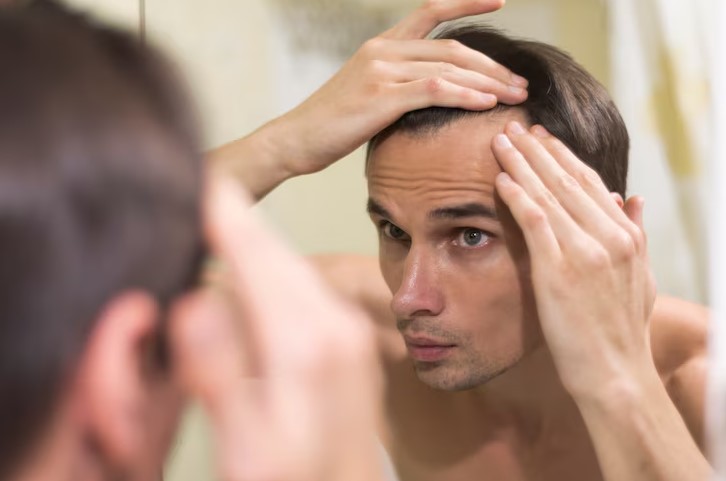
In the realm of hair loss, the term baldness of the gulfs refers to the early stages of male pattern baldness, specifically the recession at the temporal areas of the scalp. This phenomenon is a common initial sign of androgenetic alopecia, where hair loss begins at the temples, creating noticeable indentations or “gulfs” in the hairline. Understanding this pattern is crucial for the early detection and management of hair loss.
The baldness of the gulfs is not merely a cosmetic concern; it often indicates the onset of a progressive condition that, if left unaddressed, can lead to significant hair thinning or complete baldness. By recognising the early signs and understanding the underlying causes, individuals can take proactive steps to mitigate further hair loss and explore appropriate treatment options.
What does “baldness of the gulfs” mean?

“Baldness of the gulfs” is a descriptive term used to refer to a specific pattern of hair loss, particularly in men. It describes the receding hairline that often begins at the temples, creating indentations or “gulfs” on either side of the forehead. These receding areas of the hairline resemble the curved inlets or bays found along coastlines, hence the metaphorical comparison to “gulfs.” This type of hair loss is a common early sign of male pattern baldness (androgenetic alopecia), characterized by the progressive miniaturization of hair follicles.
As the hair loss progresses, the gulfs can deepen and widen, eventually leading to a significant recession of the hairline. In some cases, the hair loss may extend further back on the scalp, leaving a horseshoe-shaped ring of hair around the sides and back of the head. The term “baldness of the gulfs” highlights the distinctive visual characteristic of this type of hair loss, emphasizing the gradual retreat of the hairline and the formation of the characteristic “gulfs” at the temples.
How bad is the baldness of the gulf?
The Norwood-Hamilton scale is a classification system for male pattern baldness. It identifies temple hair loss as an early stage of hair recession. At Stage 3, the scale marks the onset of more noticeable balding. This occurs either in the centre of the scalp or when the frontal hairline starts to retreat. As a result, hair loss becomes apparent in the temporal gulfs as well.
Recognising baldness of the gulfs early allows for timely intervention, potentially slowing or halting the progression of hair loss. Let’s take a look at each stage of hair loss, so you can identify yours.
IMPORTANT: Always remember to consult a specialist in hair loss.
What are the stages of hair loss?
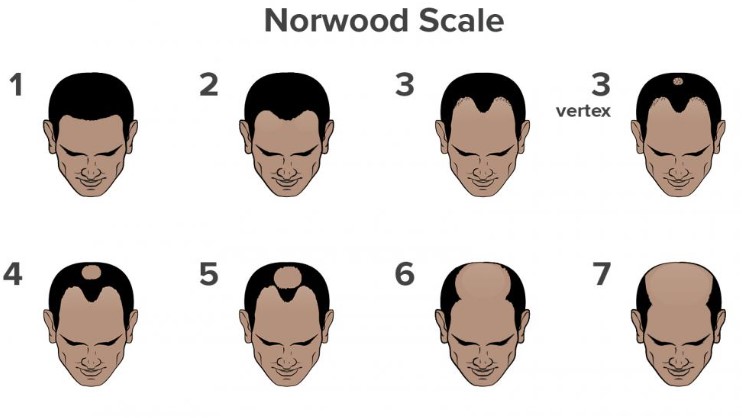
The Norwood Scale (or Hamilton-Norwood Scale) is the most common and widely used system to classify male pattern baldness:
- Type I (Minimal Recession): Very little or no recession of the hairline. This is considered the normal or youthful hairline.
- Type II (Slight Recession): Slight recession at the temples. The hairline begins to recede, forming the beginnings of the “gulfs”.
- Type III (Moderate Recession): Significant recession at the temples. This is often considered the minimum level of baldness for a diagnosis of male pattern baldness. The “gulfs” are now clearly defined and noticeable. It takes on a distinct M-shape.
- Type III Vertex (Hair loss on crown): Similar to Type III. However, there is noticeable hair loss on the crown (vertex) of the head in addition to the temples.
- Type IV (Moderate recession and thinning): More severe recession at the temples and thinning of hair on the crown. The bald areas are more extensive, but still separated by a band of hair across the top.
- Type V (Severe recession and thinning): The bald areas on the temples and crown connect, or are about to connect. The band of hair across the top is now much thinner.
- Type VI (Extensive hair loss): The bald areas on the temples and crown are now connected. There is only a narrow band of hair remaining on the sides and back of the head.
- Type VII (Most severe hair loss): The most severe stage of hair loss. Only a narrow band of hair remains, often in a horseshoe shape, around the sides and back of the head.
Are there any treatments for baldness of the gulfs?
Various treatment modalities are available to address baldness of the gulfs, ranging from topical applications to surgical interventions. The choice of treatment depends on the severity of hair loss, underlying causes, and individual preferences.
Hair transplant surgery
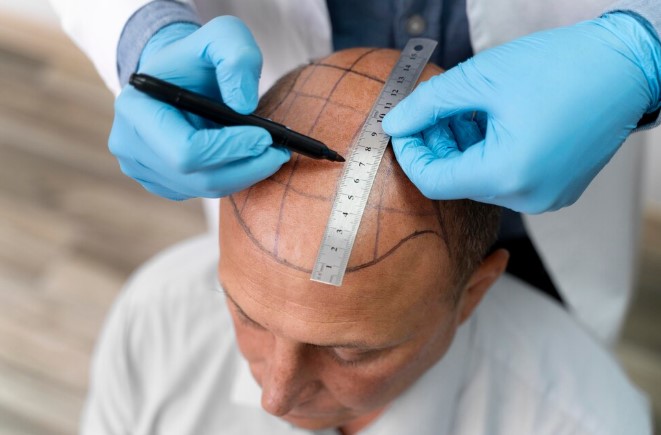
For those facing more advanced baldness of the gulfs, hair transplant surgery offers a long-term, often permanent solution. This procedure involves extracting healthy hair follicles—usually from the back or sides of the scalp, where hair is more resistant to balding—and implanting them into the recessed temple areas. Follicular Unit Extraction (FUE) is the most modern technique, allowing individual follicle harvesting with minimal scarring and faster recovery. The transplanted follicles continue to grow naturally in their new location, blending seamlessly with the existing hairline.
Unlike topical or non-invasive treatments, hair transplant surgery provides visible, lasting results for those with sufficient donor hair. However, success depends heavily on proper assessment, planning, and execution by a qualified hair restoration specialist. Patients should also have realistic expectations; it may take 6 to 12 months for full results to become apparent. Post-surgery care is critical to ensure optimal graft survival and prevent infection. For suitable candidates, especially those whose baldness of the gulfs has stabilised, hair transplants can restore confidence and a youthful appearance that other treatments may not fully achieve.
Topical and oral medications
Among the most accessible and widely prescribed treatments for baldness of the gulfs are topical and oral medications. Minoxidil, available over the counter in liquid or foam form, is applied directly to the temples to improve blood circulation in the scalp. This increased blood flow delivers vital nutrients and oxygen to the hair follicles, which can extend the growth phase of the hair cycle and support the regrowth of fine, dormant hairs. With consistent application twice daily, users may begin to notice results within three to six months, although visible changes may take longer depending on the extent of the hair loss.
In parallel, finasteride offers a systemic approach by targeting hormonal imbalances that contribute to baldness of the gulfs. This oral medication works by inhibiting 5-alpha-reductase, the enzyme responsible for converting testosterone into dihydrotestosterone (DHT)—the hormone linked to follicular miniaturisation. By reducing DHT levels in the scalp, finasteride slows down the hair loss process and allows existing hair to remain longer in the anagen (growth) phase. However, the drug must be taken consistently, and stopping treatment often results in a reversal of gains within several months. Due to potential side effects, especially in men, medical supervision is advised throughout treatment.
Low-Level Laser Therapy (LLLT)

Another non-invasive method for treating baldness of the gulfs is Low-Level Laser Therapy (LLLT), a painless treatment that utilises specific wavelengths of red light to rejuvenate weakened hair follicles. This light energy penetrates the scalp without heat or discomfort, stimulating cellular activity in the follicles and improving their function. The result is an increased production of hair and a longer active growth phase. Devices such as laser combs, caps, and helmets make it easy for users to perform sessions at home with minimal disruption to daily life.
What makes LLLT particularly appealing is its suitability for individuals in the early stages of temple hair loss, as it can help retain existing hair and encourage regrowth before significant follicle damage occurs. Typically, users need to commit to multiple sessions per week over several months, and consistency is critical to achieving and maintaining visible results. While LLLT is not a quick fix, its safety profile and ease of use make it a popular complementary treatment alongside medications like minoxidil or procedures like PRP. When used diligently, it can significantly slow the progression of baldness of the gulfs and support healthier, thicker hair at the temples.
Platelet-Rich Plasma (PRP) Therapy
As a natural and regenerative solution, PRP therapy has gained popularity for treating baldness of the gulfs, especially in individuals looking for non-pharmaceutical options. The procedure begins with drawing a small amount of the patient’s blood. This liquid is then processed in a centrifuge to isolate the platelet-rich plasma. This plasma, rich in growth factors and healing proteins, is injected into the thinning areas at the temples using fine needles. These growth factors help to stimulate the stem cells in hair follicles, effectively encouraging dormant hairs to re-enter the active growth cycle.
What sets PRP therapy apart is its use of the body’s own resources, which reduces the risk of allergic reactions or complications. Despite its appeal, PRP is not a one-time solution; a typical treatment plan involves monthly sessions for the first three to four months, followed by maintenance treatments every four to six months. Response to PRP can vary—some patients see a marked increase in hair density, while others notice only modest improvements. However, when started in the early stages of baldness of the gulfs, PRP can be an effective tool in both halting progression and regenerating lost volume.
Preventive measures to delay the baldness of the gulf
Adopting preventive strategies and making lifestyle changes can slow the progression of baldness of the scalp. They can also support overall hair health.
Gentle hair care practices

Avoiding hairstyles that pull tightly on the hair, such as tight ponytails or braids, can prevent traction alopecia. Limiting the use of heat styling tools and harsh chemical treatments also reduces hair damage. Using mild shampoos and conditioners, along with regular scalp massages, promotes a healthy scalp environment conducive to hair growth.
Nutritional support
Ensuring a diet rich in essential nutrients supports hair health. Incorporating foods high in protein, iron, omega-3 fatty acids, and vitamins A, C, D, and E can strengthen hair follicles and prevent hair loss. In cases of nutritional deficiencies, supplements may be recommended under medical supervision.
Stress management
Chronic stress can disrupt hormonal balance, leading to hair loss. Engaging in stress-reducing activities such as exercise, meditation, or hobbies can mitigate this effect. Adequate sleep and seeking support for mental health concerns also contribute to overall well-being and hair health.
Faq’s
Can baldness of the gulfs be reversed?
Yes, early intervention with treatments like minoxidil, finasteride, PRP therapy, or LLLT. They can potentially reverse or slow the progression of temple hair loss. The effectiveness varies based on individual factors and the stage of hair loss.
Is baldness of the gulfs only a male issue?
No, while more common in men due to androgenetic alopecia, women can also experience temple hair loss, especially due to hormonal changes, tight hairstyles, or nutritional deficiencies.
How long does it take to see results from treatments?
Results vary depending on the treatment and individual response. Topical and oral medications may take several months, while PRP and LLLT require multiple sessions over time. Hair transplant results become noticeable within 6 to 12 months post-procedure.
Conclusion
Baldness of the gulf serves as a crucial early indicator of male pattern hair loss, highlighting the importance of timely awareness and action. Hair loss often begins subtly, showing as a gradual recession at the temples. However, if ignored, the condition can worsen significantly. Fortunately, the Norwood Scale offers a clear framework to understand different stages of male pattern baldness. With this knowledge, individuals can explore treatment options such as topical solutions, medications, and surgical interventions. In addition, adopting preventive strategies helps slow progression and preserve existing hair. Moreover, lifestyle changes and medical therapies can enhance overall hair health. Seeking professional consultation early ensures tailored guidance and effective treatment planning.


Responsable – CAPIL SOLUTIONS. S.L
*Términos y condiciones
Finalidad – Dar respuesta a las solicitudes de información, y poder enviarle nuestras publicaciones, promociones de productos y/o servicios, gestionar los comentarios en el blog
Derechos Arco - Acceder, rectificar y suprimir los datos, así como otros derechos, como se explica en la información adicional.
info@capilclinic.us
Legitimación – Consentimiento
Destinatarios – No se cederán datos a terceros salvo obligación legal
Política de privacidad – Puede consultar nuestra política de privacidad aquí
*Política de privacidad